Today in this article we will discuss about the Thorne Creatine Monohydrate Supplement (POWDER) with PPT, PDF, Table and Infographic. Thorne Creatine Monohydrate Review: Is It Really the Cleanest Creatine You Can Buy? so, you have probably heard of creatine. It is one of the most researched sports supplements on the planet, and yet so many people are still confused about which brand to trust, whether it is safe, how it compares to other options, and whether the premium price of something like Thorne creatine monohydrate is actually worth it.
That is exactly what this article is going to break down. We are going to give you a thorough, honest Thorne creatine monohydrate review, walk you through how creatine works in the human body, compare Thorne to competitors like Kinetica creatine, Gnarly creatine, Everstrong creatine, Momentous creatine monohydrate, Cytosport creatine, Glaxon creatine, and others, and answer every question you might have about this supplement.
We will also address what Dr. Andrew Huberman says about creatine (because if you have spent any time in the health and wellness world, you have definitely seen creatine Huberman content), answer questions from creatine Reddit threads, and tell you where to buy Thorne creatine monohydrate, including on Amazon, in Canada, in Australia, and at stores near you.
What Is Thorne? Why Does the Brand Matter?
Before we talk specifically about Thorne creatine monohydrate, it helps to understand who Thorne Research is and why they are different from most supplement brands.
Thorne is a clinical-grade supplement company that has been operating since 1984. It is one of the very few supplement brands in the world that is NSF Certified for Sport, meaning every batch of their products is independently tested and verified to be free from banned substances, heavy metals, and contaminants. Thorne supplies supplements to the US Olympic team, major professional sports organizations, and thousands of integrative medicine physicians.
When we talk about high quality creatine or clean creatine, Thorne is almost always the brand that comes up first. The reason is simple: most creatine supplements are not tested the way Thorne’s are. Many mainstream creatine powders contain trace amounts of heavy metals or fillers that never show up on the label. Thorne’s manufacturing process and third-party testing ensure you are getting pure creatine powder with nothing added.
This matters more than most people realize. If you are an athlete subject to drug testing, a woman concerned about what she puts in her body, or just someone who wants to know exactly what they are consuming, brand quality is not a luxury, it is a necessity.
Thorne Creatine Monohydrate Supplement (POWDER) (.PPTX)
What Is Creatine and How Does It Work in the Human Body?
Let us cover the basics, because understanding creatine in the human body helps you make a smarter decision about whether and how to supplement with it.
Creatine is a naturally occurring compound that your body produces in the liver, kidneys, and pancreas from three amino acids: arginine, glycine, and methionine. Your body stores creatine primarily in your skeletal muscle as phosphocreatine. When you perform intense, short-duration efforts like lifting weights, sprinting, or jumping, your muscles use phosphocreatine to rapidly regenerate ATP (adenosine triphosphate), which is the primary energy currency of your cells.
In plain language: creatine helps your muscles produce energy faster during explosive, high-intensity activities. This is why it improves performance in the gym, on the track, and in sport. It also helps you recover more quickly between sets, which means more productive training over time.
Beyond athletic performance, newer research has expanded our understanding of what creatine does in the human body significantly. Studies have shown benefits for:
- Cognitive function and brain energy metabolism
- Mood and symptoms of depression, particularly in women
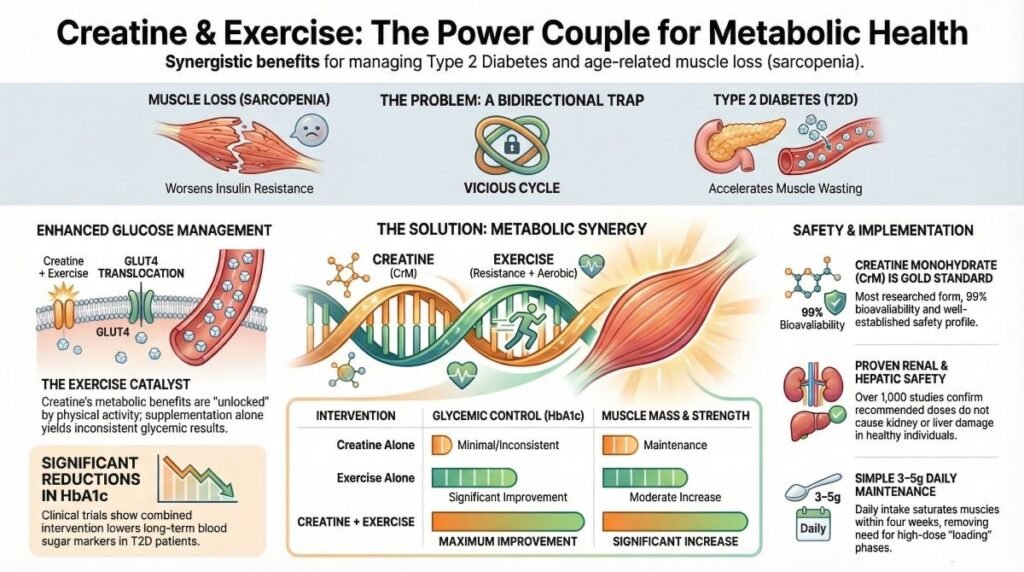
- Age-related muscle loss (sarcopenia) in older adults
- Recovery after concussion or traumatic brain injury
- Bone density and overall metabolic health
Creatine is not a steroid. This is one of the most common misconceptions you will see in online discussions, and it is worth addressing clearly. Is creatine a steroid? Absolutely not. Creatine is a naturally occurring amino acid derivative found in meat, fish, and your own body. It has no hormonal properties and does not influence testosterone, estrogen, or any other hormone. Calling creatine a steroid is like calling vitamin C a drug. The two things are completely different categories.
Thorne Creatine Monohydrate: What Exactly Are You Getting?
Thorne creatine monohydrate comes in several forms, and it is worth knowing the differences before you buy.
Thorne Creatine Monohydrate Powder
The flagship product is the Thorne creatine monohydrate powder. It is unflavored, which means it dissolves easily into water, juice, a protein shake, or really any liquid without affecting the taste. Each serving provides 5 grams of creatine monohydrate, which is the standard evidence-based daily dose recommended by sports nutrition researchers.
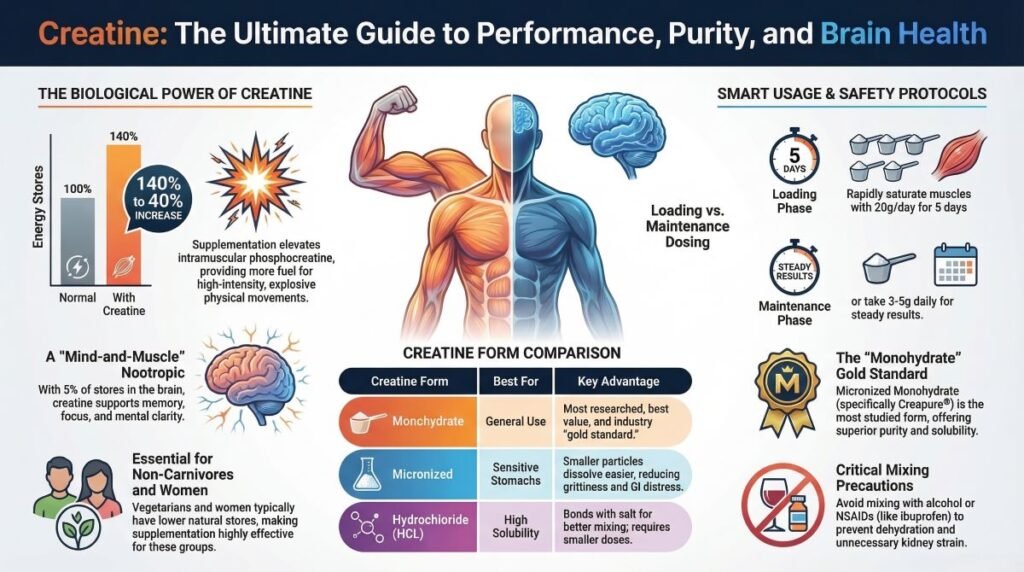
The powder form is the most cost-effective option and the easiest to use for daily supplementation. It mixes cleanly because it uses micronized creatine, meaning the particles are smaller than standard creatine, which improves solubility and reduces the gritty texture some people experience with cheaper brands.
Thorne Creatine Monohydrate Capsules
For people who do not like taking powders or want something portable for travel, Thorne creatine monohydrate capsules are a convenient option. The capsules contain the same high-quality creatine, just in a different delivery format. The main trade-off is that you need to take multiple capsules to reach a 5-gram dose, which some people find inconvenient.
Thorne Creatine Monohydrate Gummies
Thorne creatine monohydrate gummies are one of the newer additions to their lineup. These are designed for people who prefer a more enjoyable supplementation experience and are particularly popular among those who struggle with the texture or taste of powders. The gummies are NSF certified like all Thorne products, so you are not trading quality for convenience.
Thorne Creatine Monohydrate Sachets
Thorne creatine monohydrate sachets are single-serve packets of creatine, ideal for travel, gym bags, or for people who like pre-measured dosing without using a scoop. Each sachet contains one full serving and is easy to toss into a bag.
Thorne Creatine Monohydrate Review: Honest Assessment
What People Love About Thorne Creatine
If you spend any time reading Thorne creatine monohydrate Reddit threads, the feedback is remarkably consistent. Here is what real users consistently report:
- Purity: No clumping, no grit, no aftertaste. Because it is micronized and free from fillers, it dissolves almost completely in water.
- Effectiveness: Users report the expected benefits including improved strength output, better endurance on high-rep sets, and faster recovery between sessions.
- Trust: The NSF Certified for Sport badge matters enormously to athletes, healthcare workers, and anyone who is careful about what they consume. Knowing a third party has verified every batch is reassuring.
- No loading required: Unlike older creatine protocols, Thorne and most modern sports scientists agree that a standard 5g daily dose is sufficient without a loading phase.
- Suitable for vegans and vegetarians: Since creatine from meat is naturally lower in plant-based eaters, Thorne creatine monohydrate is especially beneficial for this group.
What Some Users Question
- Price: Thorne creatine monohydrate is more expensive than generic creatine monohydrate supplement options. A 90-serving container typically costs between $40 and $50 USD, compared to $20 to $30 for basic creatine powder from bulk suppliers.
- Availability: Thorne products are not always available in mainstream retail stores. Most people buy Thorne creatine monohydrate on Amazon, direct from the Thorne website, or through healthcare practitioners.
- Thorne creatine monohydrate near me / nearby: Store availability varies significantly by location. In major cities, health food stores and specialty supplement shops sometimes carry Thorne. In smaller towns, online ordering is typically the only reliable option.
Andrew Huberman on Creatine: What Does He Actually Recommend?
If you have typed creatine Huberman or Andrew Huberman creatine into a search engine recently, you have probably found a lot of content. Dr. Andrew Huberman is a neuroscientist and professor at Stanford University who hosts the Huberman Lab podcast, one of the most popular science-based health podcasts in the world.
So what does Huberman creatine content actually say? Here is an accurate summary of what Dr. Huberman has discussed publicly about creatine:
- Huberman recommends creatine monohydrate as one of the few supplements with strong enough evidence for him to take personally and recommend to others. He emphasizes the extensive peer-reviewed research backing creatine.
- He typically discusses a dose of 3 to 5 grams per day taken consistently, without a loading phase, which aligns with current sports science consensus.
- On the topic of creatine Huberman discussions about brain health, he has referenced emerging research suggesting creatine may support cognitive function, particularly in people who are sleep-deprived, stressed, or not eating much meat.
- Andrew Huberman creatine content also addresses creatine for women, noting that the research on creatine’s cognitive and mood benefits appears to be particularly significant in women, possibly due to naturally lower creatine stores.
- When asked about brand, Huberman has mentioned Momentous as a brand he works with, and Momentous creatine monohydrate also uses Creapure-grade creatine, which is the same pharmaceutical-grade standard that Thorne uses.
The bottom line on Huberman creatine: if Andrew Huberman has convinced you to try creatine, you are making a well-supported decision. The research backs it up entirely, and Thorne creatine monohydrate is one of the cleanest ways to take it.
Creatine for Women: What Reddit and Research Actually Say
Search creatine for women Reddit and you will find one of the most active supplement discussion communities on the internet. Women have historically been underrepresented in sports nutrition research, but that is changing rapidly, and the data on creatine for women is genuinely exciting.
Here is what the current evidence says:
- Women tend to have lower baseline creatine stores than men, possibly due to lower meat intake and differences in muscle mass, which means supplementation may provide a proportionally larger benefit.
- Multiple studies have found that creatine supplementation in women reduces symptoms of depression, particularly in combination with antidepressant therapy. This is an area of serious ongoing research.
- Creatine for women also shows promise for bone health, which becomes increasingly important as women age and estrogen levels decline.
- Creatine does not cause weight gain in the form of fat. The initial slight increase in body weight that some users notice is due to increased water retention inside the muscle cells, which is a normal and beneficial part of how creatine works.
- Creatine will not make you bulky, masculine, or disproportionately muscular. These concerns appear frequently in creatine for women Reddit discussions and they are not supported by evidence.
Thorne creatine monohydrate is an excellent choice for women specifically because of its purity, third-party testing, and the absence of any proprietary blends or hidden ingredients.
Creapure and Labdoor: Understanding Creatine Quality Standards
If you have researched best creatine monohydrate Reddit recommendations, you have probably seen two names come up over and over: Creapure and Labdoor.
What Is Creapure?
Creapure is a brand of creatine monohydrate manufactured by AlzChem in Germany. It is widely regarded as the gold standard of creatine production because of its pharmaceutical-grade manufacturing process and rigorous purity testing. Creapure creatine contains 99.9 percent pure creatine monohydrate with virtually no byproducts or impurities.
Thorne creatine monohydrate uses pharmaceutical-grade creatine that meets or exceeds Creapure-level standards. This is one reason why Thorne consistently scores at the top of quality comparisons.
What Is Labdoor?
Labdoor creatine refers to testing and ratings from Labdoor, an independent supplement testing and rating company. Labdoor purchases supplements from retail stores and tests them in independent labs for label accuracy, purity, and safety. They then publish a report card and grade for each product.
Thorne creatine consistently receives high grades on Labdoor tests, which is not surprising given Thorne’s own rigorous manufacturing standards. If you are comparing creatine supplements and want objective third-party data, checking the Labdoor creatine database is a smart starting point.
Thorne vs. Other Creatine Brands: A Full Comparison
There are dozens of creatine supplements on the market. Here is how Thorne stacks up against some of the most commonly searched and discussed options.
| Brand | Type | 3rd Party Tested | Price Range | Best For |
| Thorne Creatine | Monohydrate | NSF Certified | $$-$$$ | Purity-focused buyers, athletes |
| Momentous Creatine | Monohydrate (Creapure) | NSF + Informed Sport | $$$ | Huberman fans, elite athletes |
| Kinetica Creatine | Monohydrate | Informed Sport | $$ | European market, budget-premium |
| Gnarly Creatine | Monohydrate | Informed Sport | $$ | Outdoor athletes, clean label fans |
| Everstrong Creatine | Monohydrate | Limited info | $-$$ | Value buyers, beginner users |
| Glaxon Creatine | Monohydrate | Partial | $$ | Performance-focused gym users |
| Cytosport Creatine | Monohydrate | Limited | $ | Budget-conscious buyers |
| GNC Creatine HCL | HCL Form | GNC internal only | $$ | Buyers preferring HCL form |
| Beachbody Creatine | Monohydrate blend | Limited | $$-$$$ | Beachbody program users |
| Liposomal Creatine | Liposomal Monohydrate | Varies by brand | $$$ | People with GI sensitivity |
| Creaclear | HCL/Clear Dissolving | Limited | $$ | Users wanting fully clear mix |
| K4 Creatine | KreAlkalyn blend | Limited | $$ | pH-buffered preference users |
Quick Guide to Alternative Creatine Brands
Kinetica Creatine
Kinetica creatine is an Irish sports nutrition brand widely available across Europe. Their creatine monohydrate is Informed Sport certified and well-regarded in the European market for offering a clean, no-nonsense creatine at a mid-range price. For buyers in Ireland, the UK, or mainland Europe, Kinetica creatine is a solid alternative to Thorne, though Thorne’s NSF certification gives it a slight edge for drug-tested athletes.
Gnarly Creatine
Gnarly creatine is a Utah-based brand with a strong following among outdoor and adventure athletes. Their creatine is Informed Sport certified, unflavored, and uses micronized creatine monohydrate. Gnarly tends to appeal to the climbing, trail running, and skiing communities. It is a trustworthy clean creatine option, though Thorne’s clinical heritage gives it more credibility in medical and professional athletic communities.
Momentous Creatine Monohydrate
Momentous creatine monohydrate has become extremely popular in recent years partly due to its association with Andrew Huberman and other high-profile wellness figures. Momentous uses Creapure-grade creatine and holds both NSF Certified for Sport and Informed Sport certifications, making it one of the most rigorously tested options on the market. It is comparable to Thorne in terms of quality. The choice between Thorne and Momentous often comes down to personal preference, price, and which brand’s ecosystem you prefer.
Liposomal Creatine and Liposomal Creatine Monohydrate
Liposomal creatine and liposomal creatine monohydrate are newer delivery formats where creatine molecules are encapsulated in lipid (fat) spheres to potentially improve absorption. The idea is borrowed from liposomal vitamin C technology. Some brands market this as superior to standard creatine monohydrate, but the current scientific evidence does not conclusively show that liposomal creatine produces meaningfully better results than standard high quality creatine monohydrate taken consistently.
For most people, standard Thorne creatine monohydrate powder delivers excellent results without the premium price of liposomal formulas.
GNC Creatine HCL
GNC creatine HCL refers to creatine hydrochloride, a different form of creatine that is more water-soluble than creatine monohydrate. Some people prefer GNC creatine HCL because it causes less bloating or gastrointestinal discomfort than monohydrate. However, creatine HCL generally requires fewer peer-reviewed studies to back its performance benefits compared to monohydrate. If GI issues are not a problem for you, creatine monohydrate remains the best-studied and most recommended form.
Creaclear
Creaclear is a creatine product that dissolves completely clear in water, which appeals to people who dislike the slight cloudiness of standard creatine monohydrate. It typically uses creatine HCL or a buffered creatine formulation. While it is a convenient option, it has less long-term research backing than standard monohydrate forms.
K4 Creatine and Creatine 3X
K4 creatine and creatine 3x style products are marketing terms used by various brands to suggest enhanced or multi-stage creatine formulas. These creatine complex products typically blend different forms of creatine such as monohydrate, HCL, and buffered forms. While these sound impressive, sports nutrition researchers generally agree that plain, pharmaceutical-grade creatine monohydrate performs just as well or better than complex blends. Simplicity often wins in supplement science.
Cytosport Creatine and Beachbody Creatine
Cytosport creatine is a more budget-friendly option from one of the older American sports nutrition brands. Beachbody creatine refers to creatine products sold as part of the Beachbody fitness ecosystem. Both serve their markets well, but neither carries the third-party testing credentials of Thorne, Momentous, or Kinetica. For buyers who prioritize verified purity, these brands require more due diligence before purchasing.
Glaxon Creatine and Everstrong Creatine
Glaxon creatine comes from a performance-focused sports nutrition company known for innovative formulations. Their creatine products are designed with gym performance in mind and often include additional ingredients. Everstrong creatine is a brand that offers straightforward creatine monohydrate at an accessible price point. Both are reasonable options for recreational gym-goers but lack the clinical-grade credibility of Thorne.
Can You Take Creatine on a Ketogenic Diet? (Creatine and Keto)
Creatine and keto is a topic that comes up frequently in fitness communities, and the good news is that they are completely compatible. Creatine monohydrate contains zero carbohydrates and zero calories, which means it will not knock you out of ketosis.
In fact, creatine and keto may work particularly well together because ketogenic dieters often experience reduced muscle glycogen stores, which can slightly impair high-intensity performance. Creatine helps compensate for this by providing an alternative rapid energy pathway, helping keto athletes maintain their training intensity.
One thing keto dieters sometimes notice when starting creatine is a slight increase in scale weight from water retention inside muscle cells. This is not fat gain and should not be confused with breaking a ketogenic state. It is a normal, expected part of how creatine functions.
Where to Buy Thorne Creatine Monohydrate
Thorne Creatine Monohydrate on Amazon
Thorne creatine monohydrate on Amazon is available through the official Thorne storefront. Buying through the official Amazon store ensures you receive an authentic product with the correct lot number and batch certification. Prices on Amazon are generally competitive with the Thorne website and often include Prime shipping.
A word of caution: when searching Thorne creatine Amazon, make sure you are buying from the official Thorne seller and not a third-party reseller, as supplement authenticity cannot always be guaranteed from secondary marketplace sellers.
Thorne Creatine Monohydrate in Canada
Thorne creatine monohydrate in Canada is available through the Thorne website with international shipping, through Amazon Canada, and through a growing number of Canadian health food stores and supplement retailers. Canadian buyers should check the Thorne website for authorized Canadian distributors to ensure product authenticity and proper storage.
Thorne Creatine Monohydrate in Australia
For Thorne creatine monohydrate in Australia, the product is available through the Thorne website, selected Australian health supplement retailers, and through Amazon Australia. Australia has specific import regulations for supplements, so purchasing through an authorized Australian retailer or the official Thorne site is the safest approach.
Thorne Creatine Near Me / Thorne Creatine Monohydrate Nearby
If you are wondering about Thorne creatine near me or Thorne creatine monohydrate nearby, availability depends on your location. Thorne products are increasingly carried by health food stores, Whole Foods locations, and specialty supplement retailers in larger cities. The Thorne website has a store locator feature that lets you search for authorized retailers in your area. In smaller towns or rural areas, online ordering through Amazon or the Thorne website is typically the most reliable option.
Thorne Creatine Side Effects: What to Expect
A common concern, particularly among people researching creatine for the first time, is whether creatine causes side effects. Here is an accurate, evidence-based answer.
Thorne creatine side effects are minimal for the vast majority of users when taken at the recommended 3 to 5 grams per day dose. Decades of research involving thousands of subjects have not identified any significant health risks from creatine monohydrate supplementation in healthy individuals.
The most commonly reported experiences when starting creatine are:
- Slight increase in scale weight: This is water retention inside muscle cells, not fat gain. It typically resolves within a few weeks as the body adjusts.
- Gastrointestinal discomfort: A small number of users experience bloating or stomach upset, particularly if they take creatine on an empty stomach or in large loading doses. Taking creatine with food and using the standard 5g daily dose instead of loading largely eliminates this issue.
- Muscle cramps: Historically associated with creatine supplementation, but multiple systematic reviews have found no evidence that creatine increases cramping risk. Staying well hydrated is always recommended.
Creatine does not cause kidney damage in healthy individuals. This myth persists despite extensive research showing creatine is safe for normal kidney function. People with pre-existing kidney disease should consult a physician before supplementing.
Creatine is not a steroid. It does not affect hormone levels, liver enzymes significantly, or cause the side effects associated with anabolic steroids. These two things are entirely unrelated.
How to Take Thorne Creatine Monohydrate: Dosing Guide
One of the most refreshingly simple things about creatine is how uncomplicated the dosing protocol is.
Standard Daily Dose
Take 5 grams of Thorne creatine monohydrate powder once per day, every day. That is it. You can take it in the morning, at night, before your workout, or after your workout. Consistency matters more than timing.
Do You Need to Load Creatine?
Loading creatine means taking 20 grams per day for 5 to 7 days to saturate muscle stores quickly, then dropping to a 5g maintenance dose. Loading works, but it is not necessary. If you simply take 5 grams per day consistently, your muscles will reach full saturation within 3 to 4 weeks. For most people, patience is the simpler and gentler approach than loading.
Mixing Thorne Creatine Powder
Mix one level scoop (5g) into 250 to 300ml of water, juice, or a protein shake. Thorne creatine monohydrate powder is micronized, so it dissolves well. Stir or shake for 20 to 30 seconds. Some cloudiness is normal. You can also add it to coffee, smoothies, or food, as creatine is heat-stable and not degraded by cooking or hot liquids.
Thorne Creatine Monohydrate: Product Specifications
| Specification | Details |
| Serving Size | One scoop (5 grams) |
| Servings per Container | Typically 90 servings (16 oz / 450g bottle) |
| Form | Unflavored micronized powder; also available in travel stick packs and flavored versions like Pineapple Orange |
| Usage Instructions | Mix 1 scoop with at least 8 ounces of water or juice; can be used 30-90 minutes before or after exercise |
| Certifications | NSF Certified for Sport – free from over 280 banned substances |
| Allergen Info | Gluten-free, dairy-free, soy-free; no added fillers, flavors, or sweeteners |
| Creatine Type | Micronized creatine monohydrate (smaller particles for superior solubility and absorption) |
| Price Range (India) | Approx. Rs.4,600 to Rs.10,000+ depending on retailer and import source |
| Where to Buy (India) | Ubuy India, Caresoul, KWLA, iHerb, Amazon India (via import) |
Top 10 Creatine Monohydrate Supplements Comparison (2026)
| Rank | Product Name | Key Highlight | Certification | Primary Type |
| 1 | Thorne Creatine | Best Value / Top Overall | NSF Certified for Sport | Micronized Monohydrate |
| 2 | Transparent Labs Creatine HMB | Best for Muscle Growth | Informed Choice | Monohydrate + HMB |
| 3 | Momentous Creatine | Best for Performance | NSF Certified for Sport | Creapure Monohydrate |
| 4 | Nutricost Creatine Monohydrate | Most Affordable | 3rd-Party Tested | Micronized Monohydrate |
| 5 | Optimum Nutrition Micronized Creatine | Globally Trusted Staple | Informed Choice | Micronized Monohydrate |
| 6 | Swolverine Creatine Monohydrate | Best Unflavored Option | 3rd-Party Tested | Micronized Monohydrate |
| 7 | Kaged Creatine HCL | Best HCL (No Loading) | Informed Sport | Creatine Hydrochloride |
| 8 | MuscleBlaze CreaPRO | High Purity (Creapure) | Trustified Certified | Creapure Monohydrate |
| 9 | Legion Recharge | Best Post-Workout Blend | 3rd-Party Tested | Monohydrate + L-Carnitine |
| 10 | Wellcore Micronised Creatine | Best for Solubility | Lab Tested | Micronized Monohydrate |
Thorne Creatine Monohydrate: Benefits vs. Side Effects (Complete Table)
| Category | Key Benefits | Potential Side Effects |
| Physical | Power & Strength: Increases phosphocreatine stores for high-intensity bursts | Weight Gain: Initial water retention inside the muscle cells (intracellular) – not fat gain |
| Recovery | Muscle Repair: Reduces inflammation and muscle cell damage post-exercise | Digestive Issues: Stomach cramping or diarrhea if taken in high doses without enough water |
| Cognitive | Mental Clarity: Supports brain energy metabolism, potentially improving focus and memory | Dehydration: Only occurs if water intake is not increased to compensate for muscle uptake |
| Long-Term | Muscle Mass: Promotes lean muscle growth when paired with resistance training | Kidney Myth: No evidence of harm in healthy individuals. Those with pre-existing kidney disease should consult a doctor before supplementing |
How to Use Thorne Creatine Monohydrate: Step-by-Step Guide
| Step | Phase | Action | Details |
| 1 | Choosing a Strategy | Loading vs. Maintenance | Loading: 20g/day split into 4 doses for 5-7 days to saturate muscles fast. Maintenance: 3-5g/day. Most people prefer maintenance to avoid bloating. |
| 2 | Measuring | 1 Level Scoop | Use the provided scoop (approx. 5 grams). If using Thorne Stick Packs, use one single-serve packet. |
| 3 | Mixing | 8-12 oz Liquid | Mix with water, juice, or your protein shake. Thorne is micronized, so it dissolves easier, but it still settles – shake or stir immediately before drinking. |
| 4 | Timing | Anytime Daily | Pre-workout: For a mental and physical boost. Post-workout: To aid recovery. Rest days: Take it at the same time to keep muscle stores full. |
| 5 | Hydration | Increase Water Intake | Creatine pulls water into your muscle cells. Drink an extra 500ml to 1 litre of water throughout the day to prevent cramping and support absorption. |
| 6 | Consistency | The No-Miss Rule | Creatine works by accumulation. If you miss a day, just resume the next day. Do not double the dose to make up for a missed serving. |
Understanding Creatine Quality Certifications
| Certification | What It Means |
| NSF Certified for Sport | Essential for professional athletes. Ensures the product is free from over 280 banned substances. Thorne creatine carries this certification. |
| Creapure | A premium branded form of creatine monohydrate manufactured in Germany. Widely considered the gold standard for purity at 99.9% creatine content. |
| Informed Sport / Trustified | Independent certification labels that indicate the product has been tested for label accuracy and absence of contaminants. Used by brands like Kaged, Momentous, and others. |
| 3rd-Party Tested | A general term indicating independent lab verification. Less rigorous than NSF or Informed Sport but better than no testing at all. |
Pro Tips for Maximum Absorption: Quick Reference
| Tip | Explanation |
| The Carb Connection | Taking creatine with a source of carbohydrates like a banana or fruit juice triggers an insulin spike, which helps shuttle creatine into muscle cells more efficiently. |
| Temperature Matters | Thorne creatine dissolves much faster in lukewarm or room-temperature liquids than in ice-cold water. Stir or shake thoroughly before drinking. |
| Storage | Keep the container in a cool, dry place. If moisture enters the tub the powder can clump, but it remains completely safe and effective to use. |
| Morning Routine | Mix 1 scoop of Thorne creatine into your morning smoothie or glass of water as a simple daily habit. |
| Post-Gym | If you use a post-workout protein shake, add your creatine scoop directly into the shake rather than taking it separately. |
| Carry Water | Carry a reusable water bottle throughout the day to ensure you are hitting your increased water intake goal while using creatine. |
Source: Forbes Vetted, Healthline, PREVIOUS KNOWLEDGE, Medical News Today expert reviews compiled via Google, 2026
Also read: Virtual Reality Augmented Reality and Mixed Reality PPT, PDF
The “Power Bank” in Your Muscles: 6 Surprising Truths About Creatine
If you have spent any time in a gym or scrolled through fitness social media lately, you have likely encountered a “line of comments” dominated by a single word: Creatine. It is perhaps the most discussed-and misunderstood-supplement on the market. The questions are relentless: Is it actually necessary? Is it safe for women? Does it even work if you don’t eat meat?As a health journalist and consultant, I’ve seen the confusion firsthand. It is easy to get lost in gym-floor rumors, but the reality of creatine is rooted in fascinating biochemistry. To understand why this molecule is so vital, we must move past the hype and look at the actual science of how this molecule fuels the human body at a cellular level.
#1. The “Power Bank” Mechanism: The Phospho-Creatine System
To understand creatine, you first have to understand your body’s internal currency: Adenosine Triphosphate, or ATP. Think of ATP as a fully charged battery. When your muscles perform work, they “spend” this energy by breaking off a phosphate group, turning ATP into ADP (Adenosine Diphosphate). ADP is a spent battery; it has no energy left to provide.For your muscles to continue moving during high-intensity activity, that ADP must be recharged back into ATP almost instantly. This is where creatine enters as the hero of the Phospho-Creatine (PC) System . Creatine carries a spare phosphate group and “donates” it to the spent ADP, effectively recharging the battery in real-time.”Creatine is the emergency power bank of the muscle cell.”This “emergency” energy system is precisely why users feel a surge in strength during explosive movements. While your body eventually utilizes oxygen to create more ATP through aerobic pathways, the PC system provides the immediate, split-second recharge needed for high-intensity, anaerobic efforts.
#2. Fast-Twitch vs. Slow-Twitch: Why Your Workout Style Matters
Your muscles are composed of different fiber types, and your training style determines which ones you are taxing. Creatine’s effectiveness is intrinsically linked to the Anaerobic Pathway used by specific fibers:
- Slow-Twitch Fibers: These are built for endurance and consistency. They are the primary fibers used by marathon runners or those performing long-duration aerobic work. They rely on oxygen and a continuous, slow burn of energy.
- Fast-Twitch Fibers: These are built for explosive, short-duration power. They are the “hero” fibers for weightlifters, sprinters, and bodybuilders. They operate anaerobically (without oxygen).Creatine is specifically the fuel of fast-twitch fibers. Because these fibers do not have time to wait for oxygen-based energy production during a heavy set of squats or a sprint, they rely on the Phospho-Creatine system for immediate fuel. This makes it an essential tool for the explosive athlete but less critical for the long-distance endurance runner.
#3. The Internal Factory: Your Kidneys and “Laboratory”
Creatine is not a foreign substance; your body is a sophisticated factory that produces it daily. This two-step production process requires three specific amino acids: Glycine, Arginine, and Methionine .
- Step 1: The Kidney. The kidneys take Glycine and Arginine to synthesize a precursor called Guanidinoacetate (GAA) .
- Step 2: The Liver. This GAA travels through the blood to the liver-often called the “Human Body’s Laboratory”-where it meets Methionine to be finalized into Creatine.Once produced, the distribution is telling: 95% of creatine is sent to the muscles , while the remaining 5% fuels the heart and the brain . This highlights that while it is famous for biceps, it is vital for your most life-sustaining organs.This internal production also carries a heavy warning: substance abuse, particularly alcohol, directly sabotages these organs. If your “laboratory” (the liver) or your kidneys are struggling to process toxins, they cannot efficiently manufacture the emergency fuel your muscles and heart require.
#4. The Meat Paradox: 1.5kg of Mutton vs. The Supplement
While your body produces some creatine, many athletes look to dietary sources to “saturate” their muscle stores. However, reaching a performance dose of 5g through food alone is a logistical nightmare.To obtain 5g of creatine, you would need to consume approximately 1.5kg of mutton or red meat daily. This is the “Meat Paradox”: while meat is a natural source, consuming that volume introduces massive amounts of excess fats and calories. Supplements offer a “purity” benefit, providing the molecule in isolation without the caloric baggage of three pounds of steak.For vegetarians, the challenge is different. Plants do not contain creatine because they lack muscles. However, vegetarians can provide their “factory” with Vegetarian Raw Materials to maximize internal production. By consuming precursors found in walnuts, almonds, and peanuts , the body can still assemble its own supply, even in the absence of direct meat intake.
#5. Myth-Busting: Kidney Damage, Hair Loss, and “Roid Rage”
Because creatine is so effective, it is often unfairly associated with dangerous substances. Let’s look at the medical reality:
- Myth: It Damages the Kidneys. Reality: This stems from confusing Creatine (the fuel) with Creatinine (the waste product) . When you supplement, your urine levels of creatinine may rise because your body is processing more fuel. In a healthy individual, this is a sign of use, not failure. However, true kidney damage from supplements is often actually caused by heavy metal contamination (like lead) found in cheap, low-quality products.
- Myth: It Causes Hair Loss. Reality: There was a shift in medical consensus around the 2010 milestone . While some very early research suggested a link, the vast majority of post-2010 clinical evidence has moved away from this claim, showing no significant impact on hair follicles.
- Myth: It Causes Aggression or “Roid Rage.” Reality: Creatine is a tri-peptide (a group of three amino acids), not a hormone. It has no structural similarity to steroids and does not influence testosterone or androgen receptors. It provides cellular energy, not hormonal aggression.
#6. Beyond the Gym: From Seniors to Medical Vitality
Creatine is rapidly shedding its “gym bro” reputation as researchers uncover its role as a “vitality supplement.” It is increasingly used in clinical settings to treat:
- Sarcopenia: The natural wasting of muscle in the elderly.
- Muscular Dystrophy: Helping patients maintain strength in the face of muscle-degenerating diseases.
- Genetic Disorders: Assisting individuals whose bodies cannot naturally produce the Glycine-Arginine-Methionine chain.This shifts the perspective of creatine from a luxury for the elite athlete to a foundational tool for human longevity and cognitive health.
A Final Thought on Quality
If you choose to supplement, the form you choose matters. Creatine Monohydrate remains the gold standard, but the market has evolved:
- Micronized Creatine: Features smaller particles for faster absorption and fewer digestive issues.
- Creatine HCL: Often preferred by those who experience gastric distress or “bloating.”
- Buffered and Liquid Creatine: Options stabilized for pH or convenience.Ultimately, understanding creatine changes the way we view our physical limits. It isn’t a shortcut; it is the optimization of our body’s internal currency. By managing our ATP more effectively, we aren’t just building muscle-we are powering the very engine of human movement. Is it time you checked your “power bank”?
FAQ:
Is Thorne creatine monohydrate worth the price?
Yes, for most people the answer is yes, though the reason depends on your priorities. If you are a drug-tested athlete, the NSF Certified for Sport designation is non-negotiable and Thorne’s price premium is entirely justified. If you are a health-conscious individual who values knowing exactly what is in your supplement, Thorne is worth the extra cost. If budget is the primary concern and you are comfortable with a less tested brand, there are cheaper alternatives, but you are taking on more uncertainty about purity.
Is Thorne creatine the same as Creapure?
Thorne uses pharmaceutical-grade creatine monohydrate that meets comparable purity standards to Creapure, which is the branded German creatine used by some other premium brands like Momentous. Both are high quality creatine options. Thorne does not specifically market their creatine as Creapure branded but the purity level is equivalent.
What is the cleanest creatine available?
The cleanest creatine supplements are those that use pharmaceutical-grade monohydrate and carry credible third-party certification. In that category, Thorne, Momentous, and Kinetica consistently rank at the top. Pure creatine powder with no additives, fillers, or artificial ingredients, verified by NSF or Informed Sport, is what to look for.
Best creatine for men vs. best creatine for women: Is there a difference?
The creatine itself does not need to differ between men and women. The same pharmaceutical-grade creatine monohydrate is effective for both. The dose may vary slightly, with some research suggesting women may see benefits at 3 to 5 grams rather than requiring a full 5 gram dose, but Thorne creatine monohydrate is equally appropriate for all genders.
Best creatine monohydrate supplement overall: What do Reddit communities recommend?
If you survey best creatine monohydrate Reddit threads and best creatine Reddit discussions, you will consistently find Thorne, Momentous, and Creapure-based brands at the top. The consensus is clear: pick a reputable brand with third-party testing, use standard creatine monohydrate rather than exotic forms, take 5 grams per day consistently, and do not overthink the timing. The basics work.
Can I take creatine and keto together?
Yes. Creatine and keto are fully compatible. Creatine monohydrate has no carbohydrates and will not break ketosis. It may actually improve performance for keto dieters by providing an additional ATP regeneration pathway during high-intensity training.
Where can I find Thorne creatine monohydrate review information?
Thorne creatine monohydrate review content is available from verified purchasers on Amazon, on the Thorne website itself, on Reddit’s supplement communities, and from sports nutrition professionals and registered dietitians. Thorne also publishes clinical reference information for healthcare providers. Labdoor creatine testing data provides additional objective third-party review data.
Conclusion: Should You Choose Thorne Creatine Monohydrate?
After covering everything from what creatine does in the human body to how Thorne stacks up against Kinetica creatine, Gnarly creatine, Momentous creatine monohydrate, Glaxon creatine, Cytosport creatine, Everstrong creatine, and others, the answer for most people is a clear yes.
Thorne creatine monohydrate is not the cheapest option on the market, but it is one of the most trusted, most tested, and most transparently manufactured creatine supplements available anywhere in the world. Whether you are buying Thorne creatine monohydrate on Amazon, looking for it in Canada or Australia, or searching for a store nearby, you are investing in a product that has earned its reputation through scientific rigor, not marketing.
The benefits of creatine monohydrate supplementation are backed by more research than almost any other dietary supplement. Andrew Huberman and the broader sports science community agree. Reddit communities agree. Independent testing organizations like Labdoor and NSF agree.
Start with 5 grams per day. Stay consistent. Give it 3 to 4 weeks. The results will speak for themselves.
Disclaimer
This article is for informational and educational purposes only. It is not intended as medical advice. Consult a qualified healthcare professional before starting any new supplement, particularly if you have a pre-existing medical condition, are pregnant, or are currently taking medication. Individual responses to supplementation vary.